
Organised retail is the growth segment due to increasing urbanisation and rise in income of nuclear families
BY B. SHEKHAR
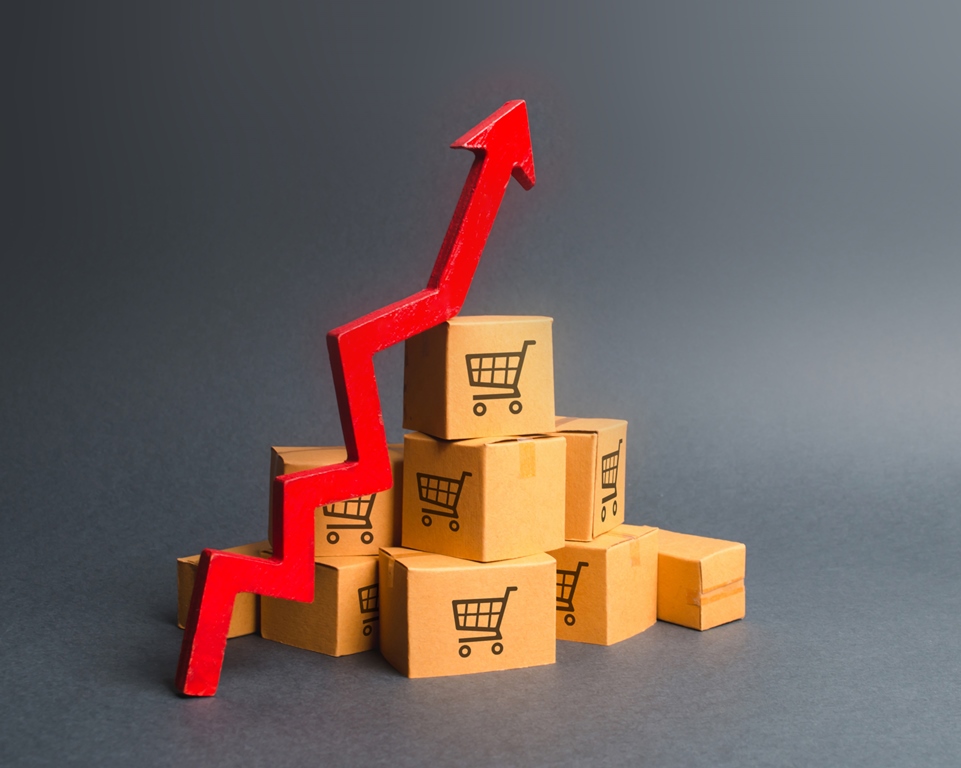
A midst the tussle and confusion between Amazon, Future Retail and the Reliance Group, the retail sector in India which had plummeted to single-digit growth, has now bounced back with very comfortable 15-17 percent growth post-Covid. The last two years were a difficult business period for the retail industry as the sector literally grappled to keep its head just above water as, except for essentials and food items, FMCG products were off the hoi polloi radar.
The good news, however, is that the Indian retail market is now estimated to reach $2 trillion by 2030, driven by socio-demographic and economic factors such as urbanisation, income growth and rise in nuclear families. On the other hand, the Indian e-commerce industry is expected to cross the $350 billion mark by 2030, growing at a CAGR of 23 percent. Retail is one sector that has been growing at consistently higher levels ever since the economy was opened in the mid-1990s.
Boston Consulting Group (BCG) in association with Retailers Association of India (RAI) in its April 2022 report sums up that India’s retail industry is on a robust path to recovery and despite unprecedented challenges, will continue to grow at close to 10 percent CAGR to reach approximately $2 trillion in the next decade.

SUCCESS OF RETAIL IN INDIA
The Indian consumption revolution started three decades ago and continues to remain steady despite unprecedented challenges. India’s consumption has been showing stable and strong double-digit growth and, despite the Covid impact in 2020, has bounced back much healthier. According to BCG, factors that have been driving this consumption growth include 1) Increasing household income, 2) Access to avenues of consumption like malls, shopping complexes, multiplexes etc., 3) Increasing internet penetration, and 4) Improving consumer confidence.
Abheek Singhi, managing director and senior partner, Boston Consulting Group, says: “Today, online channels have taken centre stage and are now generating a significantly larger share of revenue across segments for organised players. However, we believe that Covid had dramatically accelerated the growth and it is expected to stabilise. The next decade will see organised retailers focus on footprint expansion, across all formats— offline and online—to fuel future growth.
“In the first half of 2021, e-commerce accounted for nearly a third of several electronic categories, almost half of smartphones sold, and about a fifth of all apparel sales in India. In 2020, e-commerce and consumer internet companies raised more than $8 billion in PE/VC capital across 400 deals (excluding investments in Jio). India will become the third largest online retail market by 2030, with an estimated annual gross merchandise value of $350 billion.”
According to Lalit Agarwal, founder and managing director, V-Mart Retail Ltd, “We believe the next tier towns hold great potential for future growth for retailers. People in these cities are increasingly becoming more aware of quality products and brands, something we are looking to capitalise on. Beyond this, we believe e-commerce, Omni-retail and consumer analytics are among the trends that are seeing large adoption and will drive business forward.”
The Indian retail market is largely unorganised. A few studies show that the organised Indian retail market has increased by more than 50 percent between 2012 and 2020 to its current value of nearly 12 percent of total retail. The modern Indian retail industry is expected to grow at a 15 percent CAGR to reach 18 percent by 2025. Major retail categories by percentage organised retail penetration indicate that apparel and accessories (18 percent), consumer electronics (6 percent) and home & living (6 percent) will drive the increase in organised retail this decade.
According to the RAI, the retail industry achieved 93 percent of pre-Covid sales in February 2021; consumer durables and quick service restaurants (QSR) increased by 15 percent and 18 percent, respectively. After an unprecedented decline of 19 percent in the January-March 2020 quarter, the FMCG industry displayed signs of recovery in the July-September 2020 quarter with a y-o-y growth of 1.6 percent. The growth witnessed in the FMCG sector was also a reflection of positivity recorded in the overall macroeconomic scenario amid opening of the economy and easing of lockdown restrictions.
Mohit Kampani, CEO, More Retail Ltd, says: “Hybridised ‘new retail’ is the future as it blends elements of experiential brick and the convenience of click. The lines between traditional and online retail will blur as retailers will pivot between brick and mortar and online sales. This naturally increases the customer base and your ability to sweat your assets. A growing culture of immediacy is unstoppable as the industry faces a new trend: impatient customers. Consumers increasingly want instant results and retailers need to respond to this.”
However, it is not as if every aspect is looking rosy for the retail industry in India. There are many new challenges faced by retailers heading into 2022 vis-à-vis technology adoption, digital disruption, maintaining customer base, meeting consistent customer expectations, use of modern marketing tools, inspiring and retaining employee base, internal communications, effective retail digital marketing strategy, and so on.
However, experts feel that companies have sophisticated and customised technologies at their disposal that can enable a more personalised approach for engaging customers and helping businesses adapt to rapid changes in the market. By fostering customer loyalty and a memorable buying experience retailers can expect to thrive in the emerging business environment of the approaching era.
@bshekhar