
Missile exchanges and military manoeuvres dominate headlines during conflicts in West Asia the true consequences often emerge only after the guns fall silent. A confrontation involving Iran could reshape global energy markets, great-power rivalry, and India’s strategic interests in West Asia. For millions of Indian expatriates living across the Gulf, the crisis is also a reminder that the prosperity of the region remains closely tied to one of the world’s most volatile geopolitical theatres.
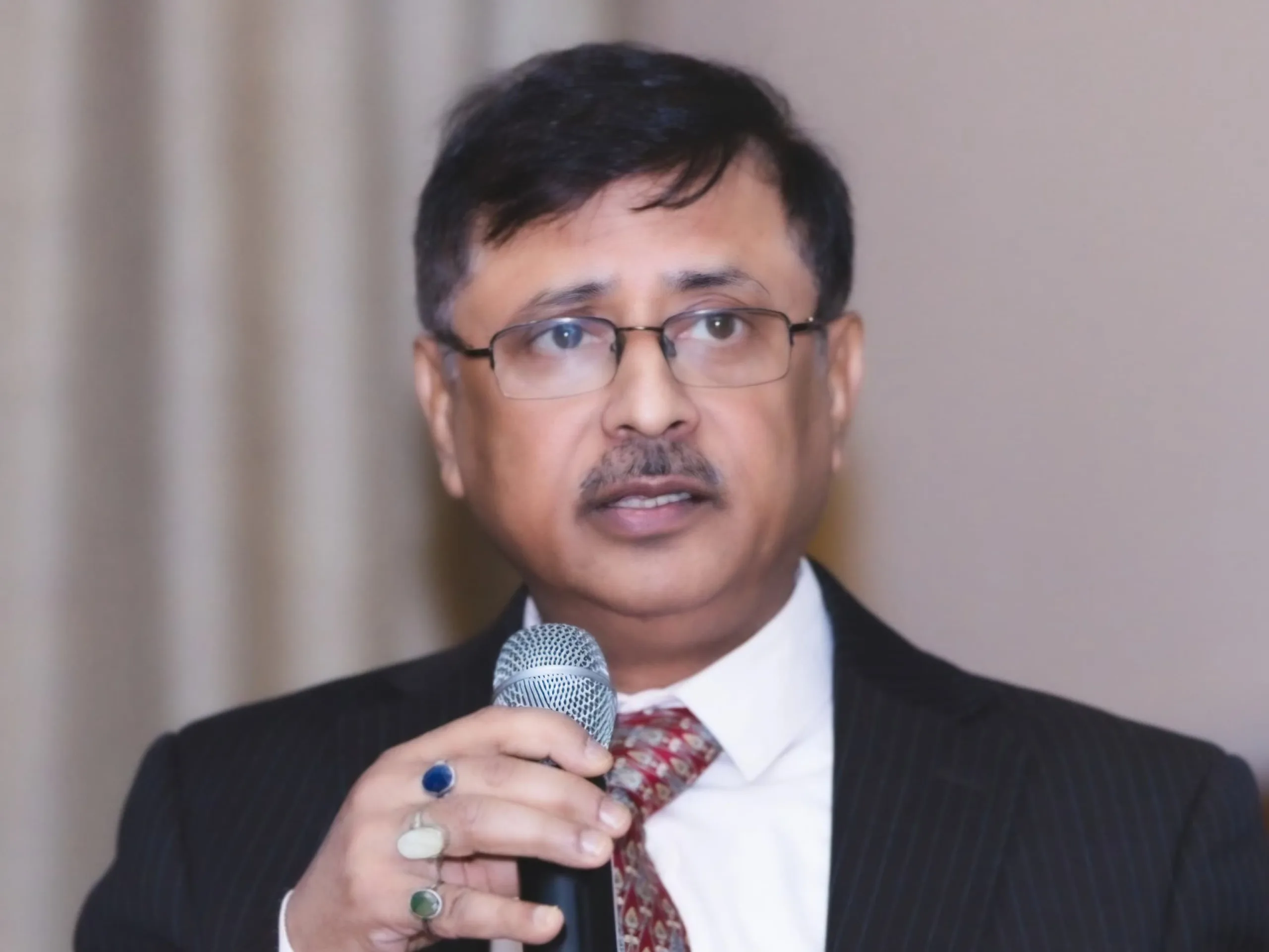
Byline: Sanjay Kumar Verma
Author’s Bio: With a diplomatic career spanning 37 years, the author served as India’s Ambassador to Sudan, Japan, and Canada. Until recently, he was Chairperson of the Research and Information System for Developing Countries (RIS), a leading think tank, focused on the Global South and international economic issues. His interests lie in foreign policy, security, technology, and the global economy.
Sirens pierced the calm evening in the Gulf. Residents in Doha looked up as air defence systems intercepted missiles streaking across the sky. For many expatriates—among them thousands of Indians who have long regarded the Gulf as a zone of stability and prosperity—the moment was unsettling. It served as a reminder that beneath the region’s glittering skylines lies one of the world’s most volatile geopolitical landscapes.
Wars in West Asia rarely conclude with decisive victories. They seldom erase grievances or redraw civilisations overnight. What they leave behind instead are altered alliances, disrupted energy routes and societies struggling to restore political and economic stability.
The conflict involving Iran, whether limited or prolonged, will eventually subside, as all wars do. Yet its consequences will extend far beyond the immediate military operations’ fall-out. From global energy markets and great-power rivalry to the lives of millions of migrant workers in the Gulf, the ripple effects of the crisis are likely to shape international politics for years to come.
Much of the commentary surrounding the Iran conflict has understandably focused on its tactical dimensions—missile exchanges, air strikes, naval manoeuvres and the security of strategic installations. These dramatic developments capture headlines and dominate policy debates.
History, however, suggests that the true consequences of wars in West Asia often emerge only after the fighting fades.
From the oil shocks of the 1970s to the geopolitical realignments that followed the Gulf Wars, conflicts in the region have repeatedly reshaped global economic systems, altered the balance of power among major states and influenced the strategic calculations of countries far removed from the Middle East.
The Iran conflict may well follow a similar trajectory.
The world that emerges after the crisis will likely be shaped by three interconnected developments: the vulnerability of the global energy system, the recalibration of influence among major powers, and the strategic responses of regional actors and countries like India whose interests remain deeply intertwined with developments in West Asia.
Global Energy Shock
The first ripple of any conflict involving Iran is felt in global energy markets. Iran occupies a central position in one of the world’s most sensitive energy corridors. The Strait of Hormuz, the narrow maritime passage between Iran and the Arabian Peninsula, serves as the gateway for a substantial share of global oil and liquefied natural gas shipments. Even the perception of instability in this chokepoint has historically been enough to trigger volatility in global energy prices.
A war involving Iran reinforces a familiar reality: the global energy system remains deeply vulnerable to geopolitical shocks. Oil prices respond rapidly to disruptions—or even perceived threats—to supply.
For importing economies, particularly in the developing world, sudden increases in energy prices translate into inflationary pressures, higher transportation costs and slower economic growth.
The Iran conflict therefore highlights the close relationship between energy security and geopolitical stability. Governments across Asia and Europe are likely to intensify efforts to diversify suppliers, expand strategic petroleum reserves and invest in alternative energy sources.
Countries that depend heavily on Gulf oil—including India, China, Japan and South Korea—have already begun exploring new supply arrangements to reduce long-term vulnerability.
Yet diversification alone cannot eliminate risk. The Gulf region will remain central to global energy markets for decades to come. Ensuring the safety of maritime routes and maintaining cooperative security arrangements in this corridor will therefore remain a critical international priority.
Blurb-1
Even the hint of instability around the Strait of Hormuz can send global energy markets into turmoil. A conflict involving Iran could reshape oil supply chains and accelerate the world’s search for energy alternatives.
Hydrocarbons and the Energy Transition
The conflict also highlights a deeper structural question concerning the future of energy.
For more than a century, hydrocarbons have formed the backbone of the global economy. Modern transportation, industrial production and international trade have depended on abundant and relatively affordable fossil fuels.
Despite growing global attention to climate change and sustainability, hydrocarbons still account for a large share of global energy consumption. Even the most ambitious renewable energy strategies recognise that oil and gas will remain essential components of the global energy mix for decades.
The Iran conflict exposes a paradox at the centre of contemporary energy politics. Governments across the world are investing heavily in renewable technologies such as solar and wind power. Advances in battery storage, electric mobility and hydrogen-based fuels are gradually reshaping energy systems.
Yet the global economy continues to depend heavily on hydrocarbon supply chains concentrated in geopolitically sensitive regions.
For many countries the lesson from repeated disruptions in energy markets is clear: energy security requires diversification. A resilient strategy must combine conventional fuels, renewable capacity, technological innovation and secure infrastructure.
India occupies an important place in this evolving landscape. As one of the world’s fastest-growing major economies, its demand for energy will continue to rise significantly in the coming decades. At the same time India has emerged as a leading advocate of renewable initiatives, particularly solar power through efforts such as the International Solar Alliance.
New Delhi’s approach seeks to shape the global energy transition while ensuring that developmental priorities remain central.
The future of energy will therefore not be defined by a sudden departure from hydrocarbons but by a gradual balancing between traditional fuels and emerging technologies.
Recalibration of Influence
The Iran conflict has also revealed how major powers are adjusting their strategic outreach in West Asia. The responses of the United States, China and Russia illustrate different approaches to influence in a changing geopolitical environment.
Blurb-2
As tensions rise, the United States, China and Russia are recalibrating their influence in West Asia, turning the region once again into a theatre of great-power competition.
The United States
For the United States, the conflict has highlighted the evolving nature of its global leadership.
In earlier crises in West Asia, Washington often succeeded in mobilising broad international coalitions. The Gulf War remains one of the clearest examples of this ability to bring together allies in support of a shared objective.
The present crisis, however, has unfolded in a far more fragmented international environment.
Several NATO allies and traditional partners have shown reluctance to align themselves fully with Washington’s posture toward Iran. While many governments have expressed concern about regional stability, there has been limited enthusiasm for direct involvement in a confrontation carrying uncertain outcomes and economic risks.
European governments remain preoccupied with security challenges closer to home following the Russia–Ukraine war. Domestic political pressures and economic concerns have also made many states cautious about becoming involved in another Middle Eastern conflict.
Coalition building therefore no longer occurs automatically. Even long-standing allies now assess their participation through the lens of national interest. The Iran conflict reflects a broader shift in which American influence remains powerful but increasingly contested in a more multipolar international system.
China
China approaches West Asia from a different perspective. Beijing’s engagement with the region has been driven largely by economic priorities including energy imports, trade expansion and infrastructure investment through the Belt and Road Initiative.
West Asia supplies a significant share of China’s crude oil imports and serves as a key link in maritime routes connecting Asia, Europe and Africa. Chinese firms have invested heavily in ports, industrial zones and energy infrastructure across the Gulf.
Diplomatically, China has cultivated relations with a wide range of regional actors including Iran, Saudi Arabia and the United Arab Emirates.
This multidirectional diplomacy allows Beijing to maintain access to energy resources while avoiding overt alignment with regional rivalries.
Yet the Iran conflict also exposes the limitations of a strategy driven primarily by economic engagement. As China’s dependence on Middle Eastern energy deepens, disruptions in the region increasingly affect its strategic interests.
Over time Beijing may find it difficult to remain only an economic actor without assuming greater diplomatic or security responsibilities.
Russia
Russia’s approach reflects a combination of opportunism and pragmatic diplomacy.
Moscow re-established its presence in the region through its military intervention in Syria in 2015, demonstrating its willingness to influence the Middle Eastern balance of power.
Since then, Russia has cultivated relationships with multiple actors including Iran, Israel and several Gulf states. Unlike the rigid alignments of the Cold War period, Moscow today maintains dialogue with competing actors simultaneously.
Energy politics also plays an important role in Russia’s strategy. As a major hydrocarbon exporter, Russia often benefits economically from rising oil prices during periods of instability in the Middle East.
Russia’s strategy therefore combines diplomatic flexibility with selective engagement.
India’s Strategic Balancing
For India the Iran conflict presents a complex diplomatic and economic challenge.
Few countries maintain such extensive relationships across West Asia. India enjoys strong ties with Israel, deep economic partnerships with the Gulf monarchies and longstanding historical connections with Iran.
This engagement reflects India’s broader foreign policy philosophy of strategic autonomy. Rather than aligning itself with rigid geopolitical blocs, India has sought to maintain pragmatic partnerships with multiple actors.
Energy security remains central to India’s interests in the region. A significant portion of India’s oil and gas imports originates from the Gulf, making stability in maritime routes essential for India’s economic trajectory.
During the recent crisis, India’s diplomacy demonstrated a measure of quiet effectiveness. Even while tensions remained high in the Strait of Hormuz, New Delhi worked through diplomatic channels with regional governments and major powers to ensure that some LNG and LPG shipments linked to India could continue to pass through the narrow waterway.
Blurb-3
With deep ties to Israel, Iran and the Gulf monarchies, India faces the delicate challenge of protecting its interests while maintaining its long-standing policy of strategic autonomy.
In an active conflict environment, such movement of energy cargo was not merely a logistical achievement but also a reflection of sustained diplomatic engagement.
The Human Dimension
Another critical dimension concerns the Indian diaspora in the Gulf.
More than nine million Indians live and work across West Asia, forming one of the largest expatriate communities in the world. These individuals contribute significantly to the economic development of their host countries while sending substantial remittances back to India.
In recent years India has received well over one hundred billion dollars annually in remittances, with roughly half originating in the Gulf region.
Beyond economics, the diaspora also serves as a vital bridge between India and West Asia, strengthening cultural, social and commercial connections.
Any prolonged instability in the region therefore carries implications not only for energy markets and geopolitics but also for millions of families whose livelihoods depend on the Gulf’s economic stability.
Blurb-4
More than nine million Indians live and work across the Gulf. For them, geopolitical tensions are not abstract diplomacy but a reminder that prosperity in the region remains closely linked to fragile stability.
The War After the War
Conflicts in West Asia rarely remain confined to their immediate geography. They reverberate across global markets, reshape diplomatic alignments and influence the strategic calculations of states around the world.
Even if the military outcome of the present conflict eventually favours the United States and Israel, it would be premature to assume that Iran will disappear as a strategic actor.
Iranian statecraft has historically relied on asymmetric strategies, including networks of regional partners and non-state actors.
The aftermath of the conflict may therefore witness a shift from conventional confrontation to a prolonged phase of low-intensity competition carried out through cyber operations, covert activities and proxy networks.
The geopolitical consequences of the Iran conflict may thus unfold over many years rather than months.
For the world, the crisis may accelerate shifts in energy systems and great-power competition. For West Asia, it may reshape regional alignments.
For India, it presents both a challenge and an opportunity.
When the war fades from the headlines, the real test will begin. Nations will have to navigate the strategic landscape that emerges afterward.
For India the task will not be choosing sides but sustaining its role as a balanced and responsible actor in a region whose history, economy and future remain closely connected with its own.
Blurb-5
Even after the fighting ends, the aftermath may unfold through cyber warfare, proxy confrontations and shifting alliances—shaping the strategic landscape of West Asia for years to come.