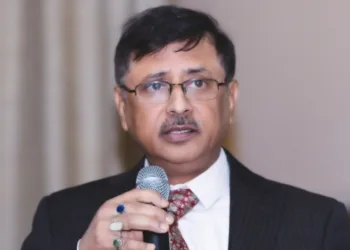


Byline: ANJANI KUMAR
A Delhi-NCR-based senior journalist, the author is known to focus on presenting a comprehensive and balanced analysis of the international issues.
India’s Generation Z is emerging as one of the most influential demographic forces in the world’s largest democracy. Digitally connected, politically aware and driven by both aspiration and anxiety, this generation is redefining how young citizens engage with governance, employment and public life. As the country moves towards the 2029 general elections, a key question looms large: will Gen Z merely influence electoral outcomes, or fundamentally reshape India’s political conversation?
A restless generation is asking difficult questions across much of Asia. From the streets of South Asia to protest sites elsewhere in the developing world, youth-led movements have increasingly emerged as powerful forces capable of influencing political discourse and, in some cases, altering political outcomes.
Coordinated through smartphones, amplified by social media, and driven by concerns over employment, inequality, governance and opportunity, these movements have transformed political conversations across several countries. Their rise has prompted an important question closer to home: could India’s Generation Z emerge as a decisive political force by the time the country approaches the 2029 general elections?
The answer is neither simple nor predictable. Yet the question itself has gained increasing relevance as India’s younger citizens become more connected, more informed and more conscious of their collective influence.
India’s Largest Democratic Generation
Generation Z—generally defined as those born between the late 1990s and early 2010s—represents one of the most significant demographic forces in modern India. More than 370 million Indians are under the age of 25, making the country one of the youngest societies in the world.
This demographic reality presents both immense opportunity and considerable pressure.
Young Indians today are more digitally connected than any previous generation. Affordable smartphones, inexpensive data and widespread internet access have ensured that debates surrounding governance, economic policy, corruption, climate change, entrepreneurship and social justice reach them instantly. Unlike earlier generations, they are exposed not only to domestic political developments but also to global examples of youth participation in public life.
At the same time, they are entering adulthood at a moment of significant economic and social transition.
Many young Indians have benefited from expanding educational opportunities, technological innovation and the growth of India’s digital economy. Government initiatives focused on entrepreneurship, start-ups, skill development and digital inclusion have sought to harness youthful energy for economic growth and nation-building.
Yet alongside these opportunities lies a growing sense of unease.
Persistent unemployment, intense competition for government jobs, concerns about income inequality and anxieties regarding social mobility continue to shape the outlook of many young citizens. For millions of graduates entering the labour market each year, the gap between aspiration and opportunity remains a pressing concern.
It is this tension—between ambition and uncertainty—that increasingly shapes discussions about the political future of India’s youth.
Blurb-1
More than 370 million Indians are under the age of 25, making Generation Z a demographic force that no political party can afford to ignore.
Lessons from Beyond India
Recent developments in parts of Asia and Africa have demonstrated the growing political influence of younger generations. In several countries, youth-led campaigns have mobilised around issues such as corruption, unemployment, governance failures and economic inequality.
These movements have often been decentralised, digitally coordinated and driven less by ideology than by accumulated frustration. Their speed and scale have attracted global attention and encouraged debate about whether similar patterns could emerge elsewhere.
In India, such comparisons frequently surface in online discussions and political commentary. Social media platforms such as Reddit, X and Instagram host regular debates on the role that young citizens should play in shaping the country’s future.
Some voices argue that Indian youth must become more politically assertive and demand greater accountability from institutions. Others caution against romanticising protest movements, emphasising the importance of democratic processes, constitutional mechanisms and electoral participation.
What these discussions reveal is not necessarily a desire for confrontation, but a growing awareness among young Indians that they possess considerable political influence.
A Politically Aware but Diverse Generation
India’s younger generation is far from apolitical. Student movements, issue-based campaigns and civic activism continue to play a visible role in public life. Recent protests concerning employment opportunities, regional autonomy, environmental issues and educational reforms demonstrate that young people remain willing to engage when matters directly affect their lives.
Yet India differs significantly from many countries often cited in discussions about youth mobilisation.
The country’s federal structure disperses political power across states, regions and multiple levels of governance. Political identities are shaped not only by age but also by language, caste, religion, geography and local economic realities.
As a result, a young voter in Bihar may prioritise employment and migration issues. An urban professional in Bengaluru may focus on entrepreneurship and innovation. A student in Tamil Nadu may be more concerned with regional identity and educational policy, while young citizens in the Northeast may focus on entirely different priorities.
This diversity makes the emergence of a single nationwide youth movement less likely.
Political analysts often observe that Indian youth are politically engaged but not politically uniform. Their concerns are real, but they are rarely identical.
Blurb-2
Unlike many countries that have witnessed unified youth movements, India’s Gen Z remains shaped by diverse regional, linguistic, caste and economic realities.”
The Real Influence of Gen Z
The political influence of Generation Z may ultimately emerge in a form very different from the mass protest movements seen elsewhere.
Its impact is more likely to be felt through voting behaviour, digital campaigning, issue-based mobilisation, civic participation and public opinion formation.
For political parties, this reality is becoming increasingly difficult to ignore.
The ruling establishment continues to emphasise youth empowerment through infrastructure development, digital initiatives, entrepreneurship programmes and welfare schemes. Opposition parties, meanwhile, increasingly focus on employment generation, educational opportunities, constitutional values and democratic accountability when appealing to younger voters.
Both sides recognise that Gen Z will represent a crucial electoral constituency in the years ahead.
Unlike previous generations, young voters consume information differently. They are less dependent on traditional media, more influenced by digital networks and often more willing to challenge conventional political narratives. Their political choices are shaped not only by ideology but also by issues that directly affect everyday life, including jobs, education, affordability, technology and quality of governance.
The Employment Challenge
Among all issues affecting young Indians, employment remains the most significant.
India’s economy continues to grow faster than many major economies, yet concerns regarding job creation persist. The demand for secure employment opportunities—particularly among educated youth—remains strong across both urban and rural India.
For many young citizens, questions surrounding employment, skills, entrepreneurship and economic mobility are likely to play a decisive role in shaping political preferences.
This does not necessarily translate into political unrest. Rather, it suggests that future elections may increasingly be fought on issues that directly affect the aspirations of younger voters.
Any government, regardless of political affiliation, will ultimately be judged by its ability to create opportunities for the country’s largest demographic group.
Blurb-3
The real challenge before India’s youth lies in the widening gap between aspiration and opportunity—particularly in employment, education and economic mobility.
Looking Towards 2029
As India moves towards the next general election cycle, the debate surrounding Generation Z is unlikely to disappear.
The more relevant question is not whether India’s youth will replicate political movements seen elsewhere, but how they will choose to exercise their influence within the framework of the world’s largest democracy.
Will economic aspirations dominate political choices? Will digital platforms create new forms of civic engagement? Will young voters reward performance over rhetoric? Or will a stronger sense of generational identity emerge around issues such as employment, education and opportunity?
Definitive answers remain elusive.
What is clear, however, is that India’s political future cannot be understood without understanding its youth.
Generation Z is educated, connected, ambitious and increasingly aware of its collective voice. Its influence may not arrive through dramatic upheaval or street mobilisation. It may instead reshape Indian politics through ballots rather than barricades, participation rather than protest, and sustained democratic engagement rather than sudden disruption.
As 2029 approaches, one reality stands out: India’s youngest generation is no longer merely observing politics. It is steadily becoming one of the most important forces shaping it.
Blurb-4
The political impact of Generation Z may not emerge through street protests, but through ballots, digital activism, civic engagement and issue-based voting.